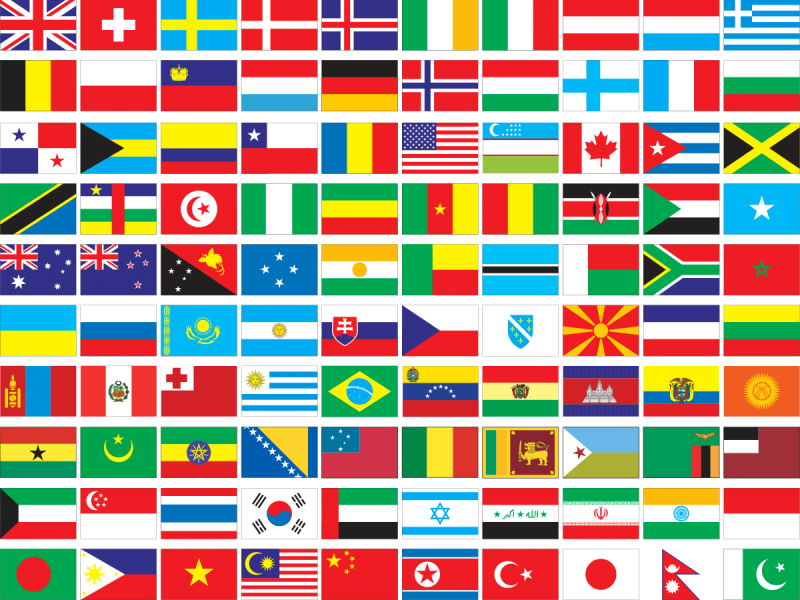
225 flags of the world, in outdoor grade polyester and the standard Australian size. If the one you want is not listed, ask us anyway.
Every flag below is part of our standard range in 1800 x 900mm, the common Australian flag size. Other sizes are available on request. Tell us which one you need and we will come back with your price and the freight.
Almost all of these are national flags. The list also carries the Commonwealth, European Union, United Nations and Tibetan flags, which we hold for the same reason people ask for them.
The most common size is 1800 x 900mm, or 6 foot by 3 foot. It looks right on poles up to 6m, acceptable on taller poles, and out of proportion on anything over 9m.
The rule of thumb is that the length of the flag in feet matches the height of the pole in metres. A 6m pole takes a 6 foot flag, a 12m pole takes a 12 foot flag.
In Commonwealth countries flags are usually twice as long as they are high. In other countries the ratio is often 5:3 or 3:2, so a national flag of another country may not be the same shape as the Australian one.
That depends on the weather, the site and how you use it. A good flag will get around 5,500 hours of flying before it is worn out. Far fewer if it lives on the coast or gets flown through storms, far more if it is in the shade and rarely sees much wind.
Flags either flog themselves to pieces in the wind or rot from UV exposure. Fly it in daylight hours only and keep it down in strong winds, and it will last up to three times longer than one flown around the clock.
Nearly every flag sold in Australia is polyester, either knitted or woven. Woven feels better and lasts longer, but it is heavier, costs more and does not fly as easily in light wind. Knitted is lighter, cheaper, takes digital printing well, has a silky look many people prefer, and flies in less wind, but it does not last as long.
Because of how they are printed, flags other than the most common ones are usually only held as knitted polyester off the shelf.
Dust, dirt and pollution work their way into the weave, and as the threads move against each other that grit breaks the cloth down. Wash and dry your flag gently every so often to get it out. Store it folded, dry and out of direct sunlight.
A worn flag is not always a dead one. The fly end can be renewed rather than replacing the whole flag.
Common questions
Our standard range covers 225 flags, from Afghanistan to Zimbabwe, in the standard Australian size of 1800 x 900mm. Almost all are national flags, and the list also carries the Commonwealth, European Union, United Nations and Tibetan flags. If the one you want is not listed, ask us anyway.
The standard size is 1800 x 900mm, which is 6 foot by 3 foot, the common Australian flag size. Other sizes are available on request. Note that flags of other countries are often a different shape to the Australian flag, commonly 5:3 or 3:2 rather than 2:1.
A good flag will get around 5,500 hours of flying before it is worn out. Fewer if it lives on the coast or gets flown through storms, more if it is sheltered. Fly it in daylight hours only and keep it down in strong winds and it will last up to three times longer.
Woven feels better and lasts longer, but it is heavier, costs more and does not fly as easily in light wind. Knitted is lighter, cheaper, takes digital printing well and flies in less wind, but does not last as long. Flags other than the most common ones are usually only held as knitted.
Either way, get in touch. We will confirm the right size, the right base and what the freight will cost before you commit to anything.